Friday, April 16, 2021


The 2021 American Rescue Plan


What does it mean to you? 


By Coleen Elkins, Licensed Insurance Agent at RV Insurance Benefits & Hill Country Health Insurance and Medicare 


Most of us choose to insure our health because it is one of our most precious assets and we don’t know what the future holds. 


We tend to take better care of ourselves if we insure our health. Financial assistance at the time of an accident or illness paid by your insurance company helps cover the cost of doctors visits, imaging and urgent care and encourages us to seek care more often for wellness exams. 


Health Insurance is not a one size fits all and there are many options choosing an insurance company to share the cost of taking care of your health can be confusing. 


After an election year there are usually changes to laws and legislation that will impact us 2021 is one of those years. 


What the American Rescue Act is:


It is temporary changes to the Affordable Care Act health insurance Plans due to COVID. You do not have to be diagnosed with COVID to qualify for benefits. 


If you are on Medicare the 2021 American Rescue Plan does not change anything for you however it may for your family members not on Medicare so please keep this information. 


The 2021 American Rescue Plan reduces the cost of your health insurance and in some cases out of pocket expenses. Enrollment began April 1st until August 15th. 


Through tax credits also known as subsidies people under age 65 are able to obtain affordable health insurance. 


The Federal Government has recently made changes to how health insurance is offered. 

For some the cost can be significantly reduced or even zero. 


If you are under age 65 and not on Medicare or Medicare disability you may qualify now to purchase health insurance for a significantly reduced amount as low as zero dollars. Because of the changes to the Affordable Care Act those age 60 to 65 benefit the most due to the recalculations for tax credits to purchase health insurance.


This is possible through a “Special Election Period” under the recently passed American Rescue Plan Act also known as the ARP law.


You do not need a qualifying event to make changes to your current ACA health benefits or to enroll in an Affordable Care Act plan for the first time during the ARP enrollment period.


The benefit changes below became active April 1, 2021 and end on August 15th. 


This is a new law passed to lower health insurance premiums for most people currently on an ACA (Affordable Care Act Plan) and make it more accessible to those who have not enrolled in the past. 


If you are currently enrolled in an “off exchange plan” (not receiving a tax credit aka subsidy) you may now qualify for a tax credit. Please contact us to determine if you are eligible. 


Additionally if one member of your household received unemployment compensation for at least one full week in 2021 the entire family is eligible for reduced premium based on age which can be as low as zero dollar premium. Documentation of unemployment benefits will need to be provided at some point to maintain the benefits applied for. 


If you are already on a Marketplace plan you may qualify to lower your premiums. High income wage earners may qualify for a tax credit under the changes. 


If you are a business owner offering health insurance to your employees you may have an opportunity to increase your employees benefits and reduce your cost. 


The role of an insurance agent is to share their knowledge and assist you in finding the health benefits that will provide you peace of mind affordably. The services of a health insurance agent are at no cost to you. Insurance companies pay them to be your advocate and customer service representative once your policy is in place. 


Saturday, January 18, 2020

Five Tips To Save Money On Your Health Care

By Coleen Elkins

RV Insurance Benefits (Medicare 4 Texas, LLC) strives to educate our clients to be smart with their medical spending.

We are an advocate for health care cost transparency and members of Free Market Medical Association .

Our goal is for you to be able to walk in to a doctors office or urgent care and see the cost of your visit plainly posted in a prominent location.

You should never have to leave a health care providers office without knowing what you owe.

One of our health insurance agents took this photo on a wall of an urgent care facility in Pensacola Florida on January 18, 2020.


Kudos to Baptist Urgent Care!

We are a full service health insurance agency and firmly believe our clients should be able to choose their health insurance based on their personal needs. This is why we offer Affordable Care Act Plans, PPO Indemnity Plans and Short Term Plans.

Think about this; you know the cost of your food before you order it at a restaurant, you know the sticker price of your car before your purchase and most of the time you end up paying less for that car don't you? 

Why do we seek medical services and walk in with an insurance card in our pocket guaranteeing payment and leave without knowing what our bill is going to be? 

Here are some tips to help you keep more of your money and insure your health with "peace of mind"

1. Don't purchase more health insurance than you need. If you are beyond childbearing age you don't need maternity coverage. It is wonderful that Affordable Care Act plans cover unlimited addiction treatment but not all people need those services. According to Addiction.com "Some inpatient rehabs may cost around $6,000 for a 30-day program. Well-known centers often cost up to $20,000 for a 30-day program. For those requiring 60- or 90-day programs, the total average of costs could range anywhere from $12,000 to $60,000." Those benefits are built into the premium of an affordable care act plan.

2. Learn to ask questions when you are making an appointment for Medical Services one great question is how much is the cost of a cash pay visit? Often the cost will be 50% less than if you use your insurance card. Pay your bill and submit your claim it is that easy. 

3. Research costs of services prior to seeking them. If the doctor orders an imaging exam such as a CT Scan or MRI you do not have to go where your healthcare provider recommended you have options.

You can check prices in your area by using Health Care Blue Book

4. If you would like to see price transparency and affordable health care be proactive tell your local government legislatures at the state and federal level. Take 10 minutes of your time and write them an email or call their office. You can find them here

5. Health insurance and Medicare are not a "one size fits all" you do not have to go it alone. Seeking the services of a knowledgable health insurance agent are at no cost to you. Your agent is paid by the health insurance companies they represent to be your customer care advocate not just a "sales person". Use an agent that focuses on educating you and works to help you save money and promised to be there for you once your policy is in place! 

Finally if you learned something here share this blog with your friends and special interest groups! 

Thank you for taking the time to become more healthcare savvy! 

Coleen Elkins, General Agent 
Medicare 4 Texas, LLC
RV Insurance Benefits 

Tuesday, May 14, 2019

RV Insurance Benefits Helps Their Clients Become Savvy Health Care Consumers And Assists Them In Maximizing Their Benefits


 RV Insurance Benefits

By Coleen Elkins, Managing General Agent
RV Insurance Benefits


In July of 2018 RV Insurance Benefits introduced a health plan offered to the RV Community through Family Motor Coach Association (FMCA).  

We have received many comments and stories from happy RVing clients regarding how their benefits have worked for them wherever they may be and saved them money over their prior health insurance plan. 

This is one of those testimonials from a client wintering in Florida.

I would like to share my recent experience with my FMCA Health Plan which saved me approximately $9300. My wife and I are Full-time RVers  and have the FMCA Health Plan. While traveling in Florida I had a kidney stone. I went to the Emergency Room at the local hospital and they confirmed I had a 3mm - 4mm stone lodged in my ureter. At that time I was told I needed to be admitted to see the urologist the next day. In the process of being admitted I became septic. Once I was stabilized in the Emergency Room I was admitted to the Medical ICU. The urologist came in and told me I needed to have a stent (a tube from his kidney to bladder) put in to allow the urine to bypass the stone. After my surgery the doctor informed my wife and I in 2 weeks they would remove the stone at the hospital then 4 days later the stent would be removed in his office. A week before the kidney stone was scheduled to be removed I received an email and phone call stating I would need to pay $10,917 within 2 days prior to the surgery or it would be canceled. At that time I asked for a cash price and was told they did not negotiate cash pricing. After processing what I had just been told I called back again and spoke to a different account representative. She told me the cash price would be $25,000 and they would give a 35% discount ($16,250). 

First thing I did was call Karis Group (the concierge service benefit of my FMCA Health Plan) to help find a doctor/facility who would help me to maximize my health plan benefits with the least amount I would have to pay out of pocket. In speaking with Karis Group the representative said she would call me back as soon as she had the information for. I received her call and she gave me the doctors/facilities in the area with contact information and pricing. It was followed up with an email containing all of the details we had spoke about on the phone. 

I called Coleen Elkins of RV Insurance Benefits and explained what was happening and she asked me to contact Dave in Management at New Era who underwrites my health plan. I told him I had already contacted Karis Group. Dave asked me to contact FMMA (Free Market Medical Association) as well to see if they had anyone in the Florida area who could help me. I spoke with FMMA and was given contact information of places I could call to see if they would be able to help me. Later in the day Dave called back and gave me the name of Dr. Lee Gross. I called Dr. Gross’s office and spoke with Anne his Office Manager. After emailing her all of the information she returned my call and told me DeSoto Memorial Hospital offered a bundled price to have my kidney stone/stent removed. First I had an appointment with Dr. Gross and they set up the appointment for me to see the urologist, Dr. Matthew Ercolani. Dr. Gross and his staff are awesome. I am not one who likes doctors or hospitals but was very happy with Dr. Gross. He is a DPC (Direct Primary Care) physician. I pay a monthly fee to him and have access to his services at any time. 

My appointment with Dr. Ercolani went very well. After speaking with  Dr. Ercolani he felt I had passed the kidney stone. He ordered a CT Scan to confirm the stone was not in my ureter. The results, NO STONE! My appointment was scheduled at Dr. Ercolani’s office to have the stent removed but he was unable to remove my stent that had been in place for 4 1/2 weeks. He asked me to come to the surgical center the next day for IV Sedation to remove it. The next day my stent was removed with no issues. 

I am very disheartened by the lack of compassion in our health care system. The original doctor I saw has never called to check on me or ask why I never had the stent removed. The reply I received when I canceled the appointment was ok, thank you for letting us know. The experience I had with Dr. Gross and Dr. Ercolani has helped me to realize there still are great doctors who genuinely care about their patients. 

I also had a few other options were available to me, Surgical Center of Oklahoma (Dr. Smith, Kelly and Teresa) and Texas Free Market Medical (Sean). I opted to stay in Florida instead of traveling to Oklahoma or Texas. 


Thanks to the help of Karis, Dave, FMMA, Dr. Gross and Dr. Ercolani I would  have paid  $10,917 instead of $1600 which I am able to be reimbursed by the FMCA Health Plan underwritten by New Era/Philadelphia American. I am very blessed! 


G. Alvarez

Monday, February 25, 2019

2018 Healthcare Costs In The U.S. Hit $11,212 Per Person


By Coleen Elkins

RV Insurance Benefits

WOW! Are you aware American consumers are spending $3.65 Trillion dollars in Healthcare in a single year?

Why are companies like Amazon and Uber tapping into the healthcare industry? Did you know Amazon spent $1 Billion dollars to purchase pharmaceutical company PillPack?

Last year a purchase by CVS of Aetna Insurance companies was approved by the Department of Justice with a $70 Billion purchase price. Why would a big pharmaceutical company purchase an insurance company?

Can tech-companies involvement in the healthcare industry drive down costs or will they weaken the system even more? In the 1990's the United States ranked 6th in the world as a healthcare leader. The United States now ranks 27th. This data is based on life expectancy among 195 countries. It is rather interesting that it was in the 1990's the federal government became very active in regulating our nations healthcare.

The $3.65 Trillion healthcare spending for 2018 is expected to spike another 5.3 percent in 2019. 
The current inflation rate is 1.6% wage growth remains at 4% at this rate health care will be 19.4 percent of our nations GDP by 2027.

Despite the increased spending the U.S. Healthcare system is becoming less efficient and more frustrating for both patients and providers. Our healthcare system is regulated heavily by both State and Federal governments could that be a cost driver?

The United States creates statistics on consumer spending for all aspects of our lives. Even so they can't put their finger on the pulse of the cause of the out of control spending of our healthcare. Could some of the cause be ourselves as consumers for not pricing the cost of their healthcare?

For the last 24 years our health insurance agency has worked to help Americans insure their health in an ever evolving market.  We  found one common habit Americans share they tend to find a doctor or medical center they "love" and resist changing. Americans will spend more on a health plan if necessary to keep "their doctor".  They may be paying higher costs to keep their doctor in ways they are not even aware of.

When was the last time you asked your doctor what the cost of an office visit is?

There is a website Healthcare Blue Book where consumers can shop for healthcare services. Test it yourself by looking up "colonoscopy with a biopsy" in your zip code.  You may be stunned and amazed at the "fairest price and the highest price".


Options for imaging facilities are popping up all over the country! 


Are you looking to become more savvy about your healthcare? RV Insurance Benefits offers personalized customer service to everyone who calls us! Let us help you understand and maximize your health insurance and Medicare today. Call our toll free number @ 1-888-337-1705 and speak to a licensed agent today! 


Thursday, January 10, 2019

Surprise Medical Bills Are On The Rise


Surprise Medical Bills Are On The Rise! 

By Coleen Elkins- RV Insurance Benefits

As consumers we purchase health insurance to transfer risk from ourselves to an insurance company in the event of illness or and accident. We don't buy health insurance hoping to use it.

We want to spend as little money as possible to protect our assets. Our goal is to purchase a plan that meets our needs and our budget. We typically choose a health insurance company our doctor is contracted with.

In years past checking to see if your medical services are being covered "in network" was an easy task. In many cases the services are pre-approved by your insurance company.
It would be natural to think every aspect of your services are going to billed as an "in network cost".  You expect to have normal copays and deductibles after that you owe nothing. If you did some research you knew a head of time what the services were going to cost you.

Most people are unaware that how doctors and hospitals do business is changing. If you are not a savvy consumer these changes could result in you owing thousands of dollars over your deductible and co-insurance.

So what is at the heart of the matter? One cause is hospitals are contracting with doctors that are not employed by the hospital. Even though the hospital is in network those in the hospital treating you may be out of network. If they are out of network the insurance company typically is not going to pay those bills. You will then be directly billed by the healthcare provider and those bills could run into the tens of thousands of dollars.

If you have an HMO it can get even more complicated.

When seeking elective (non-emergency) services we recommend doing some research yourself.

Health insurance is often purchased online with a simple "click" and without the benefits being explained to you in detail. What you see online typically is a benefit highlight. How many people actually sit down and read their policies once they enroll in a plan?

There are some ways to educate yourself so you understand your benefits. One is to seek the services of an insurance agent that will help you understand your benefits when you are in the process of choosing them. Using the services of a licensed knowledgable agent are provided at no cost to you. Health insurance agents are paid by health insurance companies to be your personal customer service expert and advocate.

At RV Insurance Benefits our team of agents are RVers helping RVers. We understand your needs firsthand. We are here to help you and educate you so you can understand your benefits.Our agency stays on top of all legislative issues. Once your policy is in place your enrolling agent becomes your personal customer service representative.

We want to know what is important to you. Our goal is to provide you with information that is going to help you maximize your health insurance benefits.

We proudly offer health plan benefits to RVers that help them utilize benefits and control costs.

Those benefits include:

* Toll-free Concierge Service to assist you in finding the most affordable & convenient health care   services.

* PHCS PPO Network with 900,000 providers Nationwide

* TelaDoc provides a convenient alternative to Urgent Care or ER Visits

* Three benefit options to choose from to fit your budget

Call us today 1-888-337-1705 and let us know what is important to you and insuring your health!

We are available six days a week to review your options with you and we look forward to being of service!

Visit our website: RV Insurance Benefits

Ask us about Medicare Supplement Plans, Dental and Accident Plans too!

Offering Peace Of Mind For Your Health Since 1995


Sunday, July 8, 2018

Is Your Pharmacist Banned From Helping You Save Money?

By Coleen Elkins, Managing General Agent

RV Insurance Benefits
24-7 Health Insurance 


Lawmakers on both sides of the isle are working to find ways to stop a practice which can keep customers from saving money at the pharmacy counter. "Gag clauses" buried in the fine print of pharmacy contracts, and imposed by pharmacy benefit managers prevent many pharmacists from telling consumers when the cash price for a medicine may be less expensive than their insurance co-pay unless the customer asks directly

Ending "gag clauses" is one option Republicans and Democrats are attempting to lower the skyrocketing cost of prescription drugs. President Trump singled out the clauses when he said he wanted to ban them in a May speech on drug prices. 

In the meantime as we wait for a government solution be a savvy consumer and ask at the pharmacy counter "Is this medication less expensive if I don't use my insurance". 

Friday, June 29, 2018

Back To The Future - Consumer Driven Health Plans

By: Coleen Elkins, Managing General Agent

24-7 Health Insurance 

RV Insurance Benefits


As we prepare for the Affordable Care Act tax penalty to be reduced to zero on January 1, 2019 we can anticipate changes once again as to how we insure our health.

I have a question for you to consider. Would you ever walk into a big box electronics store and give the clerk your Visa card and ask them to pick out a big screen TV for you?  I hope not! You compare brands, you look at brand ratings, you watch for the best sale price right?

Why then do we walk into our doctors office and blindly hand them our insurance card which provides us zero financial assistance until WE have spent over $5,000 on our deductible? Ponder this for a moment, if your health insurance premium is $900.00 a month you have spent $10,800 in a year for the privilege of carrying that health insurance card. If you utilized your insurance card and finally meet your $5k deductible and your $7,350.00 out of pocket maximum you now have spent $18,150.00 on your health that year.

Why are not savvy consumers when it comes to our health? Have we somehow we have been conditioned not to ask?

Twenty five years ago when we opened our first health insurance agency consumers were more proactive. Then along came health insurance copays provided by our friendly health insurance company, and for a very low monthly premium we now had unlimited office visits for a very low copay. The consumer lost the drive to be price conscious. Each year health insurance premium rose for over a decade.

In 2004 our government decided we needed to once again be proactive so they introduced Health Savings Account plans aka HSA's. We had a high deductible health plan, a low premium and a tax benefit. People once again began to become aware of cost and were saving money in a special savings account in the event they had to use their health plan.

Then in 2010 our Federal Government decided to get involved again and help consumers reduce the cost of their healthcare with the Affordable Care Act. They reduced the tax benefits of the HSA plans and in some cases they were not longer available to enroll in. Since 2010 insurance premium increased and networks narrowed from PPO plans to HMO plans to regional HMO plans causing many Americans to give up the doctor they had for years.

What will 2019 bring? Are the insurance companies standing by with solutions?

Actually a select few are and our agency already has solutions available in some areas of the country.

Consumer driven health plans are coming back. Referenced based pricing is on the rise to drive cost down and create competition.

We certainly are ready to help our clients find plans that fit their budget, give them their doctors back and provide options for cost savings by choosing where to receive care.

The state of Texas is a head of the curve. The Texas Department of Insurance recently created a website to the public called TexasHealthcareCosts.org. After entering their zip code a consumer can learn the cost of inpatient procedures, outpatient procedures, office visits, ER visits and more.

Here is an example of what you will learn when searching for cost of an office visit.

As a consumer driven health insurance agency we hope that the department of insurance in all states will introduce tools to drive down cost and raise consumer awareness.

Our focus is to be the advocate and a solution for our current clients we have had the privilege of serving for over 24 years, and to our new clients that seek our services which by the way are provided at no cost to you.

We look forward to being of service!

Thursday, January 25, 2018

A Peek Into 2018 Under Age 65 Health Insurance And Beyond


Alex Azar, Secretary Health and Human Services 
By Coleen Elkins  24-7Healthinsurance.com

The Senate has approved the appointment of the new Secretary of Health and Human Services Secretary Alex Azar.

This morning we are seeing reports of more executive orders planned for 2018 to provide additional exemptions for those seeking relief from the mandate to purchase health insurance. 


The individual mandate was repealed in the new tax law recently passed, but requirements to purchase coverage doesn’t end until 2019. 

The new hardship or exemption list has yet to be revealed and we will post it if/when it becomes available. 

States are already beginning to look forward to new health insurance offerings. Concerned about soaring health care costs, Idaho on Wednesday revealed a plan that will allow insurance companies to sell affordable policies that ditch key provisions of the Affordable Care Act. Idaho is believed to the the first state to take formal steps without prior federal approval for creating policies that do not comply with the Obama-era health care law. 

Idaho Department of Insurance Director Dean Cameron said the move is necessary to make cheaper plans available to people. Cameron went on to say “There are other states that have been talking about it, but we may me out in front. They may look to follow us should we be successful”. 

The Idaho plan will make it possible for insurance companies to offer cheaper plans that might be more attractive to people who have to buy their own insurance and do not have the benefit from the federal premium subsides offered under the Affordable Care Act. 

Under Idaho’s guidelines, insurers can offer plans that deny coverage for pre-existing conditions for up to 12 months unless the customer had continuous prior coverage. Insurers would no longer be required to cover pediatric dental or vision care, and though they would have to offer at least one plan with maternity and newborn coverage, other plans could exclude those benefits.

Insurance carriers can also charge people more based on where they live, their health history and their age, under the new Idaho rules. Insurers can cap their own costs at $1 million a year per individual, and can charge customers separate out-of-pocket maximums for different services. In other words, a customer could have a $7,000 out-of-pocket annual maximum for prescription drugs, another for doctor visits and another for hospitalization or mental health care.
Insurers offering such plans in Idaho still would have to offer policies that comply with the federal health care law for those who want them, Cameron said.

There is speculation whether Idaho can legally move forward. The state expects objections from Obamacare Advocates. 

“I’m not even afraid if it needs to be litigated, though that’s not my preferred course,” Cameron said. “The real question is, when does the federal agency act — if they act at all.”

Saturday, October 28, 2017

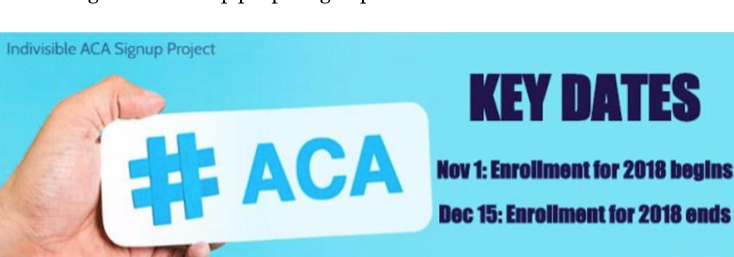
2018 Under Age 65 Open Enrollment Begins On Wednesday November 1, 2017

By Coleen Elkins   24-7 Health Insurance 


Under age 65 health insurance open enrollment will begin on Wednesday November 1st 2017 and ends on December 15th 2017. This enrollment does not involve or require action for anyone on Medicare. 

The open enrollment period applies to anyone needing to change a current ACA compatible plan or who needs to enroll in an Affordable Care act compliant plan.

We encourage everyone to take the time to carefully shop and consider all their offerings for health insurance.  

We will be able to you provide you a personal needs analysis and proposals beginning on November 1st. 

Take advantage of our 23 years experience assisting our clients find the best health insurance plan that meets their personal needs. We keep our finger on the pulse of all thing legislative that will impact our clients decisions. We are licensed in 12 states to assist you. You can learn more on our website www.24-7healthinsurance.com 

We promise our clients ongoing personal customer service once your policy is in place. 

We will only be presenting 2018 plans that are governed by the Department of Insurance in the state you purchase them. 

We will be offering the following options to insure your health for 2018:

  1. Affordable Care Act compliant plans outside of the exchange with private insurance companies. 

  1. Affordable Care Act compliant plans on exchange for those qualifying for a “tax credit” or a subsidy also known as premium payment assistance and possible cost sharing reductions. We will be able to determine your 2018 eligibility for a tax credit and enroll you. 

  1. Short term plans from multiple carriers in all 12 states we are licensed in that offer either a PPO or EPO nationwide network. 

  1. Small Group Plans for business owners with 2-50 employees. These plans are offered by A rated insurance carriers in all states we are licensed in. These plans have enrollment guidelines that vary by state.In some cases there can be a “group of one” enrollment.  
        
5.   Ancillary Plans such as dental, accident and hospital plans.                              

Some important things you should know about 2018: 

With the ACA compliant plans the rate increase of the Silver plans nationally for 2018 is 34 percent. 


Very Important: A study found In 47 of 50 cities in 2018, the cost of Obamacare's lowest-priced plan would be deemed "unaffordable" by the Affordable Care Act's own definition, according to a study from eHealth, Inc.

Under the Affordable Care Act, health insurance becomes unaffordable when the lowest-cost plan costs more than 8.16 percent of a household's gross income. Usually people who fall in this category can get an exemption from paying Obamacare's individual mandate. Your tax adviser will be able to assist you with an exemption which allows you to consider other options without a penalty. Please take 5 minutes to read the entire article here to help you understand the possibility of an exemption. 

A recent executive order signed by President Trump on October 12, 2017 allows health insurance companies to sell short term PPO/EPO plans for up to 360 days. Rather than in 90 day blocks imposed previously. Some carriers have already announced they will be implementing the enrollment changes. These plans offer a very affordable nationwide network. They do require some underwriting and do not cover pre-existing conditions. We have some very nice short term plan offerings for 2018. There are varying timelines on the offerings of these plans. 


We want our clients to be protected. If you have a grievance with your health insurance company we want you to have recourse. Therefore we are only offering plans governed by The Department of Insurance in the state you domicile. 

Plans we will not be offering for 2018:


  1. Shared Ministry Plans. Shared Ministry provide the consumer an exemption however they are not insurance plans and they are not governed by the Department Insurance which provides consumer protections. The Texas state legislature defines Shared Ministry Plans here: “Notwithstanding any other provision of this code, a health care sharing ministry that acts in accordance with this chapter is not considered to be engaging in the business of insurance”.

  1. Association Group Plans (group health insurance for 1 person). A recent executive order signed by President Trump on October 12, 2017 opened the door for the new forming of (Association Group Plans). The Department of Labor, CMS and other regulatory authorities were directed to look into regulating association plans allowing people to purchase across state lines. This will take several months to accomplish. The intent and goal is for existing “associations” to be able to provide members a viable health plan. For example purposes only…perhaps the American Diabetes Association could create a plan that insures diabetics or The Association of Realtors allowing Realtors to collectively purchase a nationwide plan. Even though you may see reference to this executive order know this has yet to take place and no new insurance company sponsored plans are being offered for this purpose. Understand the difference between an existing Association being able to pool together to purchase health insurance and an Association formed solely for the purposes of selling you health insurance! Association plans are not new they have been available since the 1980’s. Associations cropped up solely for the purpose of selling their members insurance at the highest possible profit and the lowest possible risk. They may look and feel like real health insurance. You will be asked to pay a “fee” to enroll. These plans are not direct with the insurance carrier. The plans are administered by a 3rd party which are leasing a major insurance carrier provider network. AGAIN the carrier is not administering or managing your claims. If you purchase an association plan from a state you do not domicile you may be putting yourself at risk. The reason is the only regulation of that plan is overseen by the state the plan originated in. History shows consumers have ZERO recourse with the state regulators and insurance commissioners in the states in which the plans were domiciled - because those state regulators and commissioners said it wasn't their job to regulate insurance sold to non-residents in another state. Until the Department of Labor and other Federal and State governing entities set guidelines and regulations for Association plans we will not be offering any type of Association Plan. 

Remember we purchase health insurance because we don’t know what the future holds. We encourage you to be cautious. Know your protections. If you are considering some innovative way to insure yourself do your research. Google the EXACT name of the plan (not the network) in multiple web browsers. REMEMBER: If you begin researching options and enter your name and phone number requesting more information you just gave marketing companies permission to call you. The only way you can stop the calls is to tell each individual caller to stop calling you and block their number. 

There are currently legislative hearings on solutions to the Affordable Care Act in both The House and the Senate. We are following them very closely and if anything significant arrises we will notify you immediately. 


We look forward to being of service.

Sincerely,


Coleen Elkins,
Peace of Mind For Your Health Since 1995
Managing Agent
24-7 Health Insurance
1-888-337-1705


Friday, October 13, 2017

Important News For The Under 65 Health Insurance Market

By Coleen Elkins    24-7 Health Insurance


On Thursday October 12, 2017 President Trump signed an Executive Order created to improve access, increase choices and lower the cost of healthcare. 

The Executive order provides directives to The Department of Labor, The Department of Treasury (IRS) and Health and Human Services. The Department of Labor’s secretary has been directed to consider proposing regulations or revising guidance to expand Association Health Plans (AHPs). The intent is to allow employers in the same line of business anywhere in the country to join together to offer healthcare benefits to their employees. This would be implemented to expand over time and lead to existing organizations and new ones created for the purpose of offering group health insurance. For example purposes only The Diabetes Association could work toward having a plan specifically to insure Diabetics. Associations with a common bond or purpose could choose to insure Association members to meet the needs of the members. State policy makers will have concerns that will need to be addressed as well. 

The secretaries of HHS, Treasury and Labor are to consider proposing regulations or revising guidance to expand short-term limited duration insurance. This directive would allow the agencies to revisit the rule enacted by the Obama Administration that limited the length short term plans could be purchased to three months. 

The Executive Order also opens the door to Health Reimbursement Arrangements for employer groups to assist their employees with the cost of healthcare expenses. 

The timeline is 60 days for the secretary of Labor to act within 60 days to consider proposing regulations or revising guidance on Association Plans. The Treasury, Labor and Has to act within 60 days to consider proposing regulation or revising guidance on short term plans and 120 days on Health Reimbursement Accounts. 

Within 180 days regulator agencies must report to the president on state and federal laws, regulations and policies that limit healthcare competition and choice, as well as on actions that federal and state governments could take to increase competition and choice and reduce consolidation in healthcare markets. 

On an action separate from the Executive Order the White House Confirmed Thursday that it will stop making federal payments for “cost-sharing reduction” payments to health insurers. These cost sharing reductions reduced the out of pocket costs for health care for those in certain income brackets by lowering deductibles and out of pocket expenses for them. A statement from Department of Health and Human Services confirmed the “cutoff would be immediate”. 

We have spoken to insurance companies and are told they are acting now to make changes to their systems to provide revised health insurance products and longer purchase durations ready for 2018. 

Coleen Elkins

24-7 Health Insurance